What Is Concrete Core Drilling? Applications, Equipment, and When to Hire a Pro
Concrete core drilling is a specialized construction method that contractors, facility managers, and property owners in the Omaha area should understand before starting utility work, structural testing, or building modifications. Whether you are renovating a commercial building near the Old Market or upgrading plumbing in a Douglas County residential property, knowing what the method is and when to call a professional can save time and prevent costly mistakes.
What Is Concrete Core Drilling?
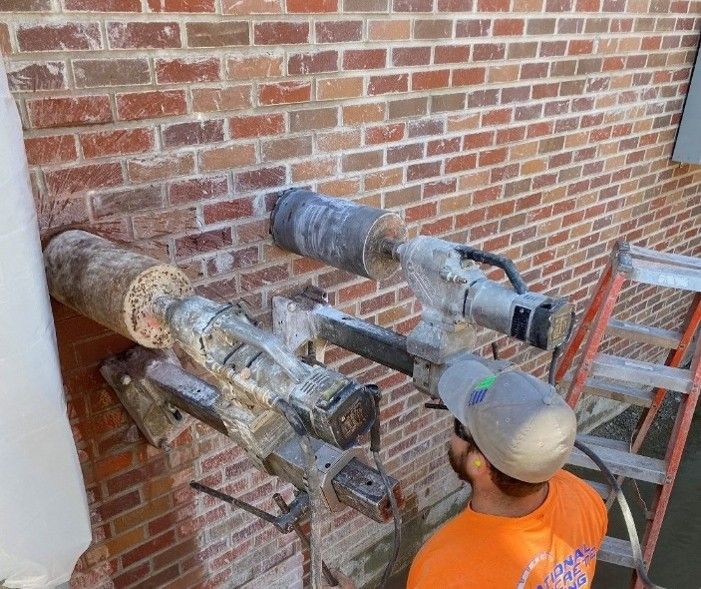
Concrete core drilling is a precise method of cutting clean, cylindrical holes through concrete surfaces using a drill bit with diamond or carbide-impregnated segments. The process removes material in a ring shape, leaving a smooth-edged opening. The material left inside the drill bit is referred to as the core.
This method is widely preferred because it causes minimal vibration and produces virtually no structural damage to surrounding material. It can be performed vertically or horizontally, making it suitable for floors, walls, and ceilings.
Common Applications for This Method
This method supports a wide range of construction and renovation work across Omaha, NE, and the surrounding metro area.
Plumbing and Sewer Line Penetrations
This method creates circular openings for plumbing, floor drains, sewer drains, and utility cables. In Omaha, older commercial districts and residential neighborhoods often require this work when upgrading aging plumbing systems running through concrete foundations or slab floors.
HVAC and Ventilation Systems
HVAC contractors rely on this method when routing ductwork or refrigerant lines through load-bearing walls in commercial buildings, warehouses, and multi-unit residential properties. Drilling can be done horizontally or vertically in walls or slabs.
Electrical and Data Installations
Running conduit, fiber optic lines, and electrical cable through concrete requires clean, accurate holes. This is especially relevant for commercial renovations in Omaha where new technology infrastructure must be added to existing concrete structures without major demolition.
Structural Sampling and Testing
Cores are extracted and crushed to determine the compressive strength of the concrete. Engineers and inspectors working on public infrastructure, bridges, and roadway projects in the Omaha and Lincoln corridor often require core samples to verify concrete integrity before repairs or expansions begin.
Anchor Bolt and Handrail Installations
Crews handle pipe bollard installation, handrail and anchor holes, and fireplace exhaust systems. These applications are common on both new commercial builds and renovation projects throughout Douglas and Sarpy Counties.
Equipment Used in the Process
Diamond-tipped core bits are the industry standard for cutting through reinforced concrete with precision. Bits are available in diameters from 1/2" up to 60", covering everything from small conduit sleeves to large manhole openings.
All core drills use water while cutting to suppress dust and keep the diamond blade cool, though dry cutting is available upon request in special circumstances. Drill rigs can be mounted to floors, walls, or ceilings depending on project angle. Power sources include 110/220V electric, hi-cycle electric, 480 electric, and hydraulic options.
What Size Hole Can Be Drilled?
Small anchor holes may measure just 1/2" in diameter, while utility runs and large drain installations can require openings many inches wide. A range of sizes can be drilled up to 18" in diameter and to virtually any depth. A qualified crew will assess your site and recommend the correct bit size and rig configuration before work begins.
Is the Process Loud or Dusty?
Water-cooled drilling significantly reduces airborne dust at the cutting face. Noise levels are generally lower than saw cutting or jackhammering, making this method one of the less disruptive options when an opening must be made through concrete. Indoor projects may use HEPA vacuum systems for additional dust management.
Can This Method Be Used on Reinforced Concrete?
Yes. Diamond-tipped bits cut through rebar and steel within the concrete matrix. A skilled operator will scan or review structural drawings when possible to position holes in a way that avoids critical reinforcement, reducing the risk of damage to surrounding structures.
When Should You Hire a Professional for This Work?
DIY work of this kind is rarely advisable beyond very minor, shallow holes. Reinforced slabs, load-bearing walls, post-tensioned structures, and commercial projects all carry serious risk without the right equipment and experience. Hitting a post-tension cable or cutting through a structural element without proper assessment can compromise an entire building section.
You should hire a professional when the project involves any of the following:
▸ Commercial or industrial structures with reinforced or post-tensioned concrete.
▸ Openings larger than a few inches in diameter.
▸ Horizontal drilling through exterior walls or structural columns.
▸ Utility work governed by Omaha municipal permits or Douglas County building codes.
▸ Structural sampling required by an engineer or inspector.
Attempting complex work without the proper rig, bit selection, and water management can result in cracked slabs, blowouts, or damaged utilities already embedded in the concrete.
Get Expert Cutting Services Serving Omaha, NE
Concrete core drilling serving Omaha, NE, and the surrounding metro area requires a crew that understands local construction conditions, building codes, and project timelines. National Concrete Cutting, Inc. has built a reputation for precision and reliability across the Council Bluffs and Omaha metro region, handling everything from small residential penetrations to large-scale commercial and infrastructure jobs.
If your next project requires clean, accurate holes through concrete, reach out to the team at
National Concrete Cutting, Inc. to learn more about their work. You can also explore their
services or
contact the team directly to request a free quote. Call
(712) 325-1125 today.
Interior Demolition vs. Exterior Demolition: What Lincoln and Omaha Contractors Need to Know in 2026